

Solutions tailored to your sector.
Every sector works differently. A law firm site is not designed like a hotel; restaurant communication is not done like a construction firm. 16 years across 258 sectors.
- Industry
- 258active areas of expertise
- Projects
- 204+completed projects
- Years experience
- 16+reading briefs in the field
- Geography
- TR · TRNC · EUworked across three markets
Legal & Law Practice
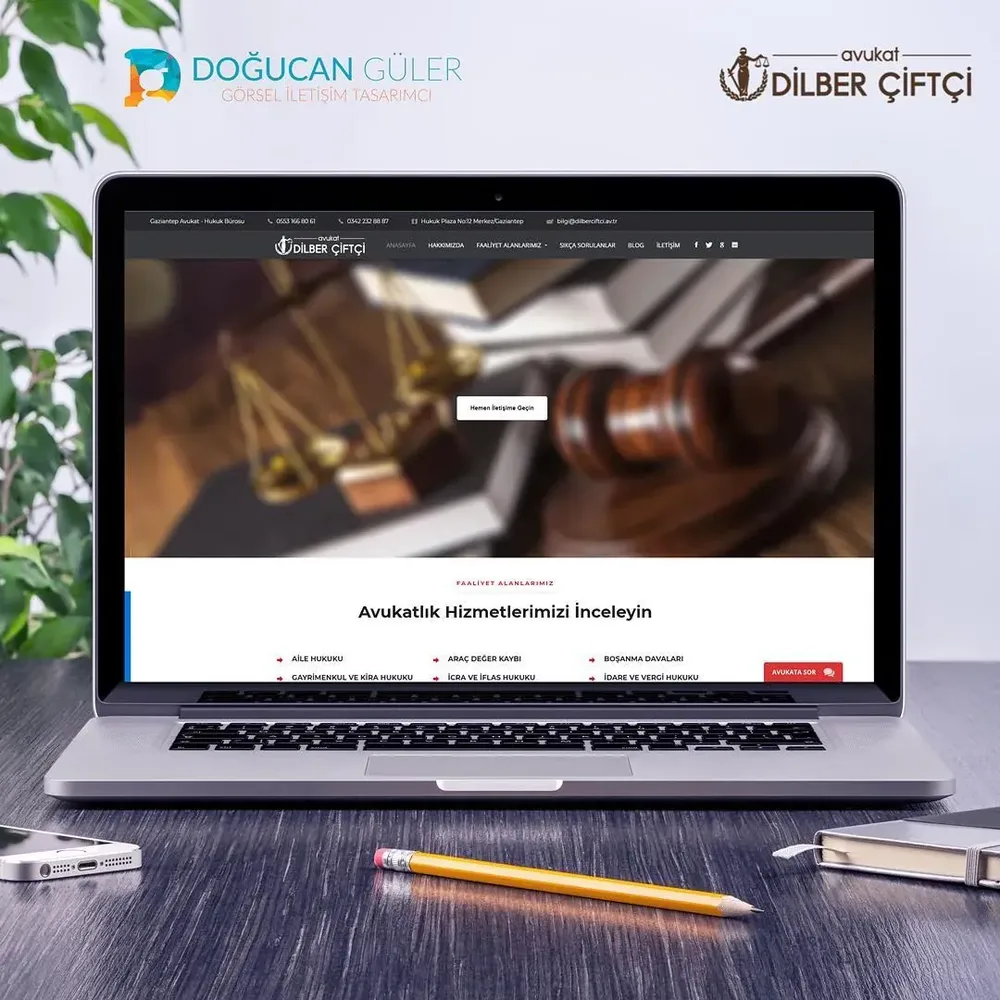
A law firm's website is not just a showcase — it's a signal of reputation. The design must be measured, trustworthy and professional. Not flashy advertising or eye-catching imagery; typography, hierarchy and clean copy take centre stage.
I produce content within the Turkish Bar Association's ethical rules and build GDPR-compliant forms and appointment systems. Client confidentiality, certified SSL and secure communication are defaults on every project.
- GDPR-compliant forms & data flow. Privacy notices, explicit consent, secure storage.
- Professional corporate identity. A measured design language compliant with bar ethics rules.
- Online appointments & consultation. Calendar integration, automated reminders.
- Full privacy infrastructure. SSL, encrypted email, optional client portal.
Healthcare & Clinics
Healthcare communication is a heavily regulated field. I craft a restrained, trust-building voice that stays within the Ministry of Health's "Healthcare Services Promotion Regulation." Restricted content like patient testimonials, before/after photos and promotional offers is carefully filtered out.
I design appointment-focused sites for clinics, dietitians, physiotherapists and dentists with clean information architecture and seamless mobile experience. The medical team page, service list and transparent process narratives are the most critical pages.
- Regulation-compliant content. Promotional copy that respects advertising restrictions.
- Online appointments & pre-screening. WhatsApp + form + calendar integration.
- Doctor & service card system. Detail pages, certification section, FAQ module.
- Strict GDPR + health data protection. Encrypted communication, consent management.
Hotel & Tourism
Three things win on hotel and boutique-stay sites: high-quality imagery, fast booking and multi-language support. The guest wants to see the room, see the price and book in under 30 seconds — straight from the homepage. Experience over narrative.
To reclaim traffic from platforms like Booking, Expedia and Airbnb, I build direct booking, loyalty discount and exclusive package pages. The hotel's "soul" — its views, food and architecture — should carry the site.
- Multi-language & multi-currency. TR/EN/DE/AR · TRY/EUR/USD support.
- Direct booking engine. Booking integration, automated calendar.
- Cinematic visual storytelling. Drone footage, night shots, room tours, lookbooks.
- Mobile-first speed. Under 2-second homepage even on 3G.
Restaurant & Café
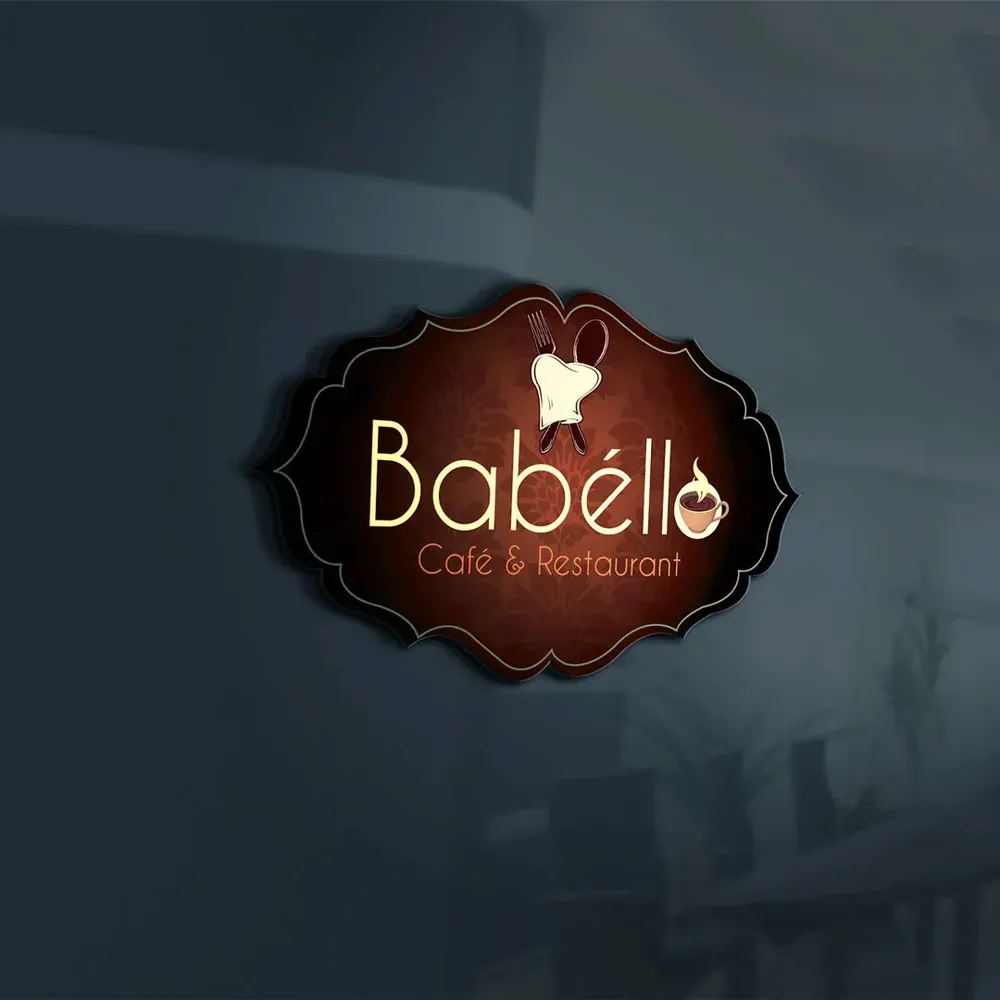
In food and drink, the brand starts on the plate — packaging, menu, storefront and digital must all stay consistent. What guests see on social should match what they see in the room. Here, 70% of the work is photography, 30% is words.
Digital menus (QR), Google Maps optimisation, table reservations and Instagram integration are the most frequent needs. I also set up a separate workflow for review management (Yandex, TripAdvisor).
- QR menu & digital signage. Easy to update, multi-language, allergen tags.
- Google Maps & local SEO. Top-3 target on "near me" searches.
- Reservations + contact. WhatsApp as main line, delivery platform links.
- Social media visual system. Consistent Instagram templates & content calendar.
Construction & Architecture
Construction and architecture firms have long, B2B-heavy sales cycles. The site's first job is to show reference projects and engineering capacity without leaving room for doubt. Not muddy site photos — renders and technical drawings.
I build mini-portfolios that present ongoing and delivered projects in a card format with m² · location · client info, plus a dedicated corporate quality page for ISO and licence certificates. A downloadable PDF company profile is essential for investors.
- Project portfolio module. Filters for location, m², client and function.
- Renders & technical visuals lead. 3D walkthroughs, plans and sections, drone shots.
- Corporate profile PDF. Downloadable company file, reference list, ISO certificates.
- Investor & tender form. Separate flows for tender tracking, quote requests and subcontractor applications.
Technology & SaaS
A tech company's site is a marketing page — it has to explain the product in 8 seconds, prove the benefit and drive trial. Every pixel here should serve the "click demo" goal. Aesthetics must never lag behind function.
For B2B SaaS, enterprise software and dev studios: conversion-focused landing pages, skills pages, pricing comparison, case studies and developer documentation. A/B testing infrastructure ships by default.
- Conversion-focused landing. Hero · social proof · features · CTA · FAQ flow.
- Demo & freemium flow. "Try free," live demo, calendar integration.
- Case studies & metrics. Concrete wins like "Company X grew 62%."
- Performance & SEO foundation. Lighthouse 95+, green Core Web Vitals, JSON-LD.
Financial & Advisory
For CPA and chartered tax advisor offices, the site is the digital extension of "trust in expertise." It's content-strategy-heavy: tax calendars, annual announcements, regulatory change summaries. Visuals are minimal, typography academic, palette restrained.
Instead of "request a quote," I design a "book a discovery call" approach — plus client portals & document-sharing infrastructure (e-invoices, tax filings). Growth comes from content & LinkedIn, not advertising.
- Tax calendar & announcements panel. Filing dates update automatically.
- Client portal & document sharing. Encrypted area, GDPR-compliant uploads.
- Calculators. VAT, income tax and gross-to-net calculators.
- Content engine — blog & guides. CPA-focused SEO, downloadable guides.
Biomedical & Lab
In biomedical and lab equipment, the buyer is an engineer, physician or procurement specialist. They need raw data, not aesthetics: specs, certificates, regulatory compliance, warranty, service coverage. The site has to act as a technical showcase.
I build a system that makes datasheet PDFs both downloadable and searchable, with filterable CE/FDA/IVDR certificates. Distributor applications get their own flow; tender document requests are one-click.
- Product catalogue & spec pages. Filters: range, precision, certification.
- Certifications & regulatory section. CE, FDA, IVDR and ISO 13485 downloadable.
- Distributor & service network map. Interactive map filtered by city/region.
- Technical support & tender form. Service requests, training enquiries, tender documents.
NGO & Association
For NGOs, the digital presence is built around donations, volunteering and impact storytelling. It has to spark the urge to "join in." Not corporate, but not amateur either — balanced between emotional story and concrete numbers.
I design donation flows (card, bank transfer, regular supporters), volunteer applications, reporting (annual transparency) and campaign management modules. Impact measurement (how many people we reached, how many books we distributed) is shown via visual infographics.
- Donation flow & recurring supporters. One-tap card donations, recurring payments.
- Transparency report & financial audit. Annual audit, income-expense charts.
- Volunteer & membership form. Skill-based matching, event calendar.
- Impact storytelling. Story + numerical proof, visual infographics.
HR & Recruitment
For HR agencies, headhunters and career platforms, the audience is twofold: candidate and employer. The site has to win over both segments at once. For the candidate it must speak to "the future on offer"; for the employer, "depth of the talent pool and process transparency."
I design job listing management, automatic CV collection, ATS integration (Workable, Greenhouse) and a candidate portal. Employer brand pages are modular — add a company and the template fills itself.
- Open position management. Filtered listings, application form, automated notifications.
- ATS integration. Workable, Greenhouse and Lever connectors; automatic CV transfer.
- Employer brand mini-page. A sub-page per company covering culture, team and benefits.
- Candidate experience. One-tap apply, status tracking screen, automated follow-ups.
The 6 most-requested industries · at a glance
Typical project, average timeline and investment range — a quick summary to see your industry's digital transformation map clearly.
- Typical project
- Clinics, Dietitians
- Timeline
- 4-7 weeks
- Price range
- ₺35,000 – ₺95,000
- Typical project
- Software & SaaS
- Timeline
- 6-12 weeks
- Price range
- ₺60,000 – ₺200,000
- Typical project
- Business Consulting & B2B Services
- Timeline
- 5-8 weeks
- Price range
- ₺40,000 – ₺110,000
- Typical project
- Attorneys, Law Firms
- Timeline
- 4-6 weeks
- Price range
- ₺45,000 – ₺120,000
- Typical project
- Gastronomy
- Timeline
- 3-5 weeks
- Price range
- ₺22,000 – ₺65,000
- Typical project
- E-Commerce & Online Sales
- Timeline
- 6-10 weeks
- Price range
- ₺45,000 – ₺160,000
The figures above are starting references; the final quote varies depending on each brief's scope.
The full visual portfolio is on Behance
Case studies, brand books, mockups, brand book pages and full industry reference sets are all live on my Behance. The process behind the frames you see on this page — the drafts and "before/after" comparisons — all live there.
- Industry case studies
- Web & mobile mockups
- Brand book samples
- Process & draft workflows
Why industry specialisation?
Working with someone who speaks your industry's language instead of a generic designer cuts brief-reading time in half — and your first mockup round lands much closer to target. The win isn't just time, it's ROI.
- Industry expertiseThe right terminology, the right hierarchy
- Specific UXUser journey ready to go
- RegulationGDPR, ethics committees, regulations
- Faster briefingShorter discovery, sharper output
A page built for a law firm is built on entirely different psychology than one built for a restaurant. A law office demands "measured typography, clean hierarchy, awareness of bar ethics"; a restaurant wins with "high-quality imagery, instant menu access, local SEO signals." Industry expertise removes the need to relearn these differences brief by brief — the first draft comes out far more on-target.
Specific UX decisions come from industry experience: on a SaaS site, the "demo CTA" should sit at the top right of the hero; on a clinic site, "book online" must be visible above the fold; on a B2B industrial site, "download PDF profile" should be pinned to the top nav. These micro-decisions let me apply on the first brief what a generic agency would only learn in round 3 or 4.
The most critical issue is regulatory awareness. Advertising codes in healthcare, bar ethics in legal marketing, capital-markets framework in finance, CE/FDA compliance in biomedical — designing without these limits in mind costs you both reputation and money. An industry-focused approach maps these invisible walls at the brief stage and avoids the later "we have to take this down" surprise.