In today's saturated, time-starved world, the competition to grab a customer's attention — and their wallet — is fierce. Most products are similar in features and quality, which makes consumers more likely to try, buy, and…
In today's saturated, time-starved world, the competition to grab a customer's attention — and their wallet — is fierce. Most products are similar in features and quality, which makes consumers more likely to try, buy, and…
What Is Branding? — post content
In today's saturated world of too much and too little time, capturing a customer's attention - and winning their wallet - is a competitive challenge. Most products are similar in features and quality, making it hard to convince consumers to try, buy, and rebuy. Yet, against the odds, there are some companies that inspire loyalty beyond reason. This passionate, emotionally driven loyalty is triggered by one fundamental thing - branding. But what is a brand, really? And why is it so important?
Branding has been around since 350 AD and is derived from the word “Brandr,” meaning “to burn” in Old Norse. In the 1500s, it referred to what farm owners burned onto cattle to indicate ownership. These simple and easily identifiable symbols carry all the hallmarks of the modern logo. But today, branding is more than just an appearance or a logo. It has come to denote the emotional “gut feeling” reaction a company can elicit from its customers. With the emergence of the internet, it has become the key to breaking through brand clutter.
Your brand lives in hearts and minds
In short, your brand is the set of perceptions people have about your company. It is a carefully cultivated emotional expression of your value that lives in people's hearts and minds. Branding is the set of actions you take to develop your brand. When done right, branding becomes a beautiful symphony of design, language, and experience, all combined to develop a very specific feeling. The archetype of “gut feeling” branding is Apple, the most successful brand in the world.
Apple's CEO John Sculley told The Guardian newspaper in 1997, “People talk about technology, but Apple was a marketing company.” “It was the marketing company of the decade.” No one understood this more than Steve Jobs, who brought Apple back. On the brink of decline in the 1990s, I came back by renewing the brand through a series of stylistic changes, rejuvenating messaging, and consistent advertising.
Jobs understood, above all, that the hallmarks of good brand strategy include consistency, consistency, and clarity. Together, these three Cs create powerful psychological connections for customers. Users know what to expect when using Apple products and software.
Although it may seem vague and unattainable, it is important to understand that branding is not out of your control. Any company, large or small, can proactively launch the process of developing and influencing positive perceptions to help the business succeed. Ideally, branding should start with company understanding, because once public perception is set, it is hard (if not impossible) to shift. In the words of Jobs, “The chance to earn a memory is the essence of brand marketing.”
Why do you need branding?
Brand or branding - if you don't actively define your brand, the market will do it for you. And it may not be pretty. Therein lies the main incentive to deliberately brand your business, but for good measure, here are a few more:
Branding helps you stand out in the competition
If you're a designer in the market for a new laptop, do you immediately find yourself browsing the Apple Store online? Apple as a brand has spent almost no time enhancing its image because they perfected their beautiful interfaces and intuitive features. You pick a Macbook without doing any research, because it's your perception that there is no real competitor in the market. Why? Because Apple's “I'm a Mac” campaign convinced you that it is the most accurate option when it comes to personal laptops. This just shows that branding helps customers solidify their decisions when they have various options.
Branding increases the value of your offering
There's a reason people are willing to pay more for an Apple product than its competitors. Branding elevates your offering from a commodity to a unique product and lets you charge a premium. Apple's “1984” campaign launching the original Macintosh not only opened the way to an innovative era for Super Bowl ads, but also enabled them to sell their computers at higher prices than competing brands. From that moment on, all their campaigns depicted Apple as a symbol of visionary counterculture, against every competitor as dull, status quo, and conformist, conveying the same fundamental message.
https://youtu.be/R706isyDrqI
Branding creates a human connection with your customers
The art of storytelling allows you to engage with your customers on an emotional level. For example, Apple's innovative ad campaigns and famous product placements have told countless stories revolving around nervous and exciting luxury at the end of years. A theme that especially resonates with the urban millennial demographic. More importantly, one that audiences worldwide can relate to.
Branding builds customer loyalty
At heart, the Apple brand is human-centered, and this remains consistent across all touchpoints, from exceptional customer support at their Genius Bars to transparency and honesty in all their communications, even in their flaws. The secondary hook to customer loyalty lies in the company's ability to brand the necessity of its products. The iPhone has never been the most revolutionary smartphone on the market, but by reinforcing simple integration among all the products that come with it, the company has made it easy for you to think of Apple first.
The elements of branding
Now that we've established the Why, let's talk about the How, starting with your mission and vision statements. Think of your mission as a short and concise description that defines the brain of the operation, the current state of your organization, and its purpose. Meanwhile, your company's vision is the heart and provides an inspiring and motivating image of what you want to achieve in the long run.
[caption id="attachment_6926" align="alignnone" width="930"] Firefox style guide via Mozilla.org[/caption]
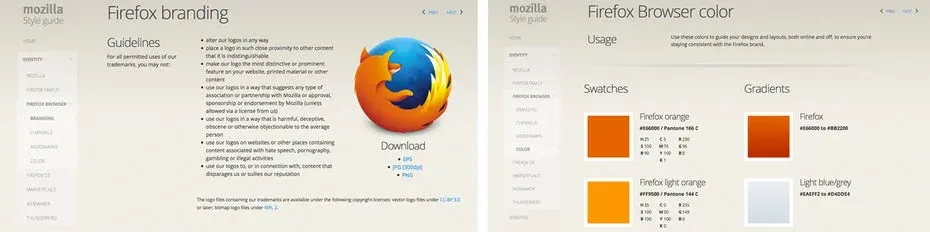
With the mission and vision statement set as the foundations of your organization, your brand strategy covers everything in between. This ultimately takes the form of brand guidelines (sometimes called a brand bible.) This is a tangible document that will reflect and support your business goals, differentiate you from competitors, resonate with customers, provide a template for decision-making, and accelerate ideas. For future marketing campaigns.
Remember that when your company's direction shifts or changes, you can add to and update your guide. Apple's roughly 200-page style booklet has undoubtedly multiplied over the years and expanded to include localization methods for their expanding international markets, as well as the proper use of the latest product names. Firefox, on the other hand, keeps things simple with an interactive web page that designates the brand's separate assets and ties everything back to its principles of philanthropy. Facebook's guide goes through every feature on the platform, ensuring proper use, and includes helpful dos and don'ts.
A better brand means better marketing
As a general rule, products have a limited life cycle, but brands - if managed well - can last forever. And once you've identified exactly who you are as a brand, marketing becomes much easier. Combined with ongoing market research and analysis, your brand bible should give you a tactical advantage in determining the best way to market your products. Are you focusing on traditional marketing like radio and billboards, or is your potential customer more swayed by viral YouTube videos and Snapchat filters? Marketing can be a mix and match of tactics, but be careful not to spread yourself too thin. By constantly consulting your brand guide, you should be able to focus your efforts on tactics that really matter.
For example, Apple spends next to nothing on paid advertising and largely relies on product placement and media flow. Once you're tempted, they hook you on the art of copy. Look at the Apple Macbook product page. As with all other computer brands, the technical specs are listed, but most of the main real estate focuses on copy customized for their target demographic. Instead of screen resolution, you see phrases like “tactile vibration,” “retina display,” and “multi-touch gesture.” Sure. But valued at $154.1 billion (87% more than the second-place Google), Apple's reign as the world's most valuable brand is due to such innovative marketing.
At the end of the day, marketing is a process that brings you leads and sales, while branding is the foundation on which you build your reputation and customer loyalty. From veterans like Apple to startups, it's clear that good branding is the secret to success.
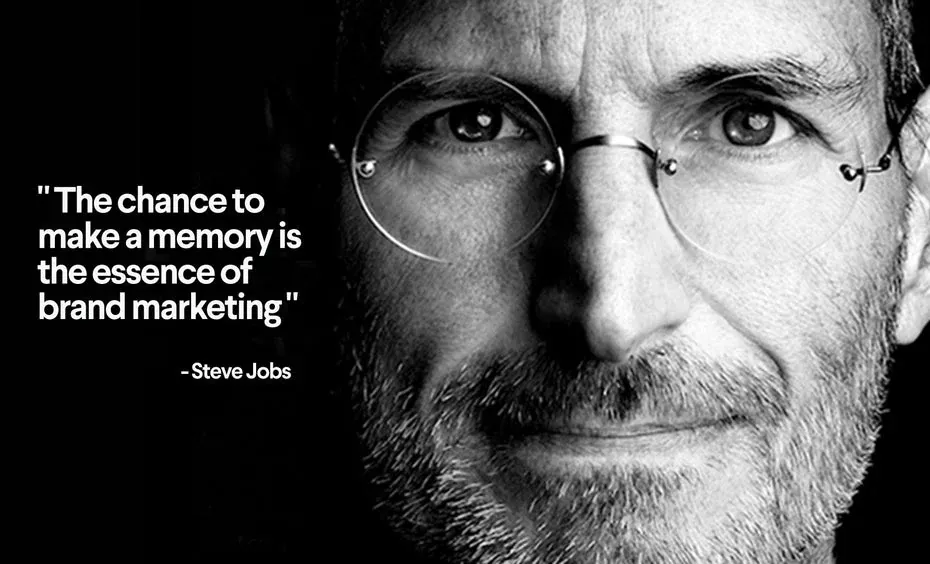
 Although it may seem vague and unattainable, it is important to understand that branding is not out of your control. Any company, large or small, can proactively launch the process of developing and influencing positive perceptions to help the business succeed. Ideally, branding should start with company understanding, because once public perception is set, it is hard (if not impossible) to shift. In the words of Jobs, “The chance to earn a memory is the essence of brand marketing.”
 Firefox style guide via Mozilla.org[/caption]
With the mission and vision statement set as the foundations of your organization, your brand strategy covers everything in between. This ultimately takes the form of brand guidelines (sometimes called a brand bible.) This is a tangible document that will reflect and support your business goals, differentiate you from competitors, resonate with customers, provide a template for decision-making, and accelerate ideas. For future marketing campaigns.
Remember that when your company's direction shifts or changes, you can add to and update your guide. Apple's roughly 200-page style booklet has undoubtedly multiplied over the years and expanded to include localization methods for their expanding international markets, as well as the proper use of the latest product names. Firefox, on the other hand, keeps things simple with an interactive web page that designates the brand's separate assets and ties everything back to its principles of philanthropy. Facebook's guide goes through every feature on the platform, ensuring proper use, and includes helpful dos and don'ts.
Firefox style guide via Mozilla.org[/caption]
With the mission and vision statement set as the foundations of your organization, your brand strategy covers everything in between. This ultimately takes the form of brand guidelines (sometimes called a brand bible.) This is a tangible document that will reflect and support your business goals, differentiate you from competitors, resonate with customers, provide a template for decision-making, and accelerate ideas. For future marketing campaigns.
Remember that when your company's direction shifts or changes, you can add to and update your guide. Apple's roughly 200-page style booklet has undoubtedly multiplied over the years and expanded to include localization methods for their expanding international markets, as well as the proper use of the latest product names. Firefox, on the other hand, keeps things simple with an interactive web page that designates the brand's separate assets and ties everything back to its principles of philanthropy. Facebook's guide goes through every feature on the platform, ensuring proper use, and includes helpful dos and don'ts.



![8 Best Security Plugins to Protect Your WordPress Sites [2026 Updated]](https://dogucanguler.com/storage/blog/wp/2025/03/WordPress-Sitelerinizi-Koruyacak-8-En-Iyi-Guvenlik-Eklentisi-2025-Guncel.webp)
![Best SEO Plugins and Tools for WordPress [2026 Updated]](https://dogucanguler.com/storage/blog/wp/2025/03/WordPress-icin-En-Iyi-SEO-Eklentileri-ve-Araclari-2025-Guncel.webp)


