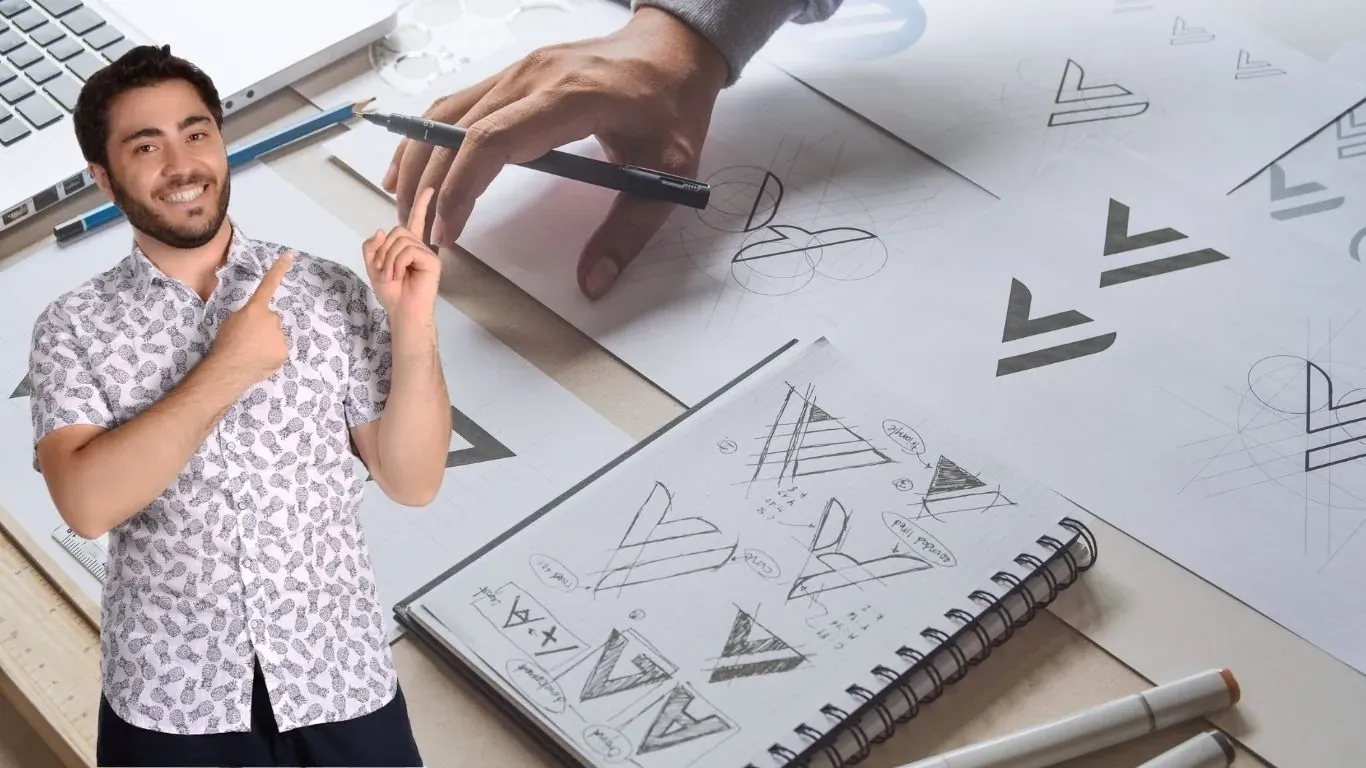
Is it ever possible to see a major brand without a logo? No, because no brand is without one. A logo has a huge impact on how customers perceive your brand. That's why it's crucial that your logo is eye-catching and…
Is it ever possible to see a major brand without a logo? No, because no brand is without one. A logo has a huge impact on how customers perceive your brand. That's why it's crucial that your logo is eye-catching and…
How to Design a Logo: A Comprehensive Guide — post content
Is it ever possible to see a major brand without a logo? No, because no brand is without a logo. A logo has a huge impact on how your customers will perceive your brand. That's why it's natural to expect your logo to be eye-catching. So, how can you achieve that?
Don't worry! This comprehensive guide will teach you everything you need to know to design the perfect logo for you and your business. Whether you start with a logo maker or design your logo by working directly with a designer, this guide will give you all the information you need to create the perfect logo for your brand. From defining your brand identity and understanding what makes a great logo, to making the right design choices and navigating the design process, keep reading to learn everything about logo design.
Here are the most important steps in designing a logo:
Understand Why You Need a Logo The business world is actually like dating—you're trying to attract the right customers and make them fall in love with your brand. Think of your logo like the photo on your dating profile. It will get people interested and trying to learn more about your brand. So, you want to look your best.
Your logo will have a huge impact on the first impression of your business: It will inform your customers about your brand and let them understand if you're a good fit for them. Your logo is an important part of your brand, so you must ensure it's done well. Your logo will appear on all your branding materials, from your website to your packaging and business cards. A professional logo design has the power to effectively communicate what you stand for. It will also make a good first impression and help you stand out from your competitors.
Define Your Brand Identity You want your logo to communicate the personality of your brand. To be able to do that, you first need to understand the core personality of your brand. When you have a clear understanding of what makes you unique and what your brand is, it'll be much easier to make complementary and harmonious design choices that complete this picture.
Here are some questions to help you determine your brand identity:
Why did we start this business?
What are the beliefs and values that are important to us as a company?
What do we do better than others?
What makes us special?
How would we define our brand in three words?
What are three words we would want our customers to use to describe us?
Find Inspiration for Your Design One of the toughest parts of the design process is searching for logo inspiration. Fortunately, we have some tips to make this easier for you.
Brainstorm: You can hold a brainstorming session to gather ideas as concepts. You can follow these three steps to come up with the best creative logo ideas:
Follow brainstorming rules: Get all ideas (even really bad ones) out and write them down.
Think like your target audience: Make a list of words that describe your brand and how you want it to be perceived.
Include Everyone: Brainstorming alone may not be enough; diverse perspectives can yield creative solutions.
Create a Mood Board: If you're a visual person, a mood board can be a perfect tool for inspiration. You can have a board with different logos, color combinations, illustrations, or graphics. Digital boards like Pinterest can also be a good starting point.
Study Your Competitors The best place to steal the best ideas is from your competitors! Check out what's out there, learn what works well, and what to avoid. Think about what your competitors are doing and what's different about you, and identify how you can highlight these differences in your logo.
Make sure you stand out clearly from your competitors. If all the other businesses are using a monochrome theme, perhaps you can stand out by using color.
Choose Your Design Style Now that you have a clear idea of your brand and have gotten inspired, it's time to translate that into design. Many elements come into play here, from colors, shapes, and graphics to typography. Move step by step by isolating each component and evaluating what it can do for your logo.
Classic: The classic style can appeal to a wide audience and provide longevity. It avoids overly elaborate color palettes and graphics, leaving a reliable and clean impression.
Retro or Vintage: Retro designs that recall the past and evoke nostalgic feelings emphasize history and quality. Old-style logos can include hand-made illustrations and organic shapes.
Modern and Minimalist: Modern style is preferred for a clean and minimal look. Plenty of white space is used, details are few, and lines are simple.
Fun and Different: Colorful and cute designs may be preferred for younger or young-at-heart target audiences. Fun mascots or sweet illustrations can reflect your brand's character.
Handmade and Craft: The handmade style emphasizes individuality and handmade quality. Combined with vintage, it can make a strong statement.
Find the Right Logo Type The type of logo can best complement your brand name or overall aesthetic. You can choose one of the 7 main logo types or combine them to create a unique design.
Letter Logos (Monograms)
Word Logos (Logotypes)
Symbol Logos (Pictorial)
Abstract Logo Marks
Mascots
Combination Logos
Emblem Logos
Pay Attention to Color Choice Colors can have different meanings, and color psychology is complex. In short, colors are associated with certain emotions and ideas. You can review a detailed guide to learn more about color theory.
Red: Expresses excitement, passion, and anger.
Orange: Energetic and invigorating.
Yellow: Provides an accessible and friendly vibe.
Green: Connected to nature.
Blue: Seen as a calming and trustworthy color.
Purple: Can add a luxurious and mystical vibe.
Pink: Generally gives a young and feminine impression.
Brown: Suitable for tough and masculine vintage logos.
Black: Provides a sleek, modern, and luxurious look.
White: Provides a clean and modern look.
Gray: Helps you achieve a mature and classic look.
You can tell your brand's color story by using color combinations. The color wheel can help you with this.
Choose the Right Typography Choose a suitable font to make your logo look complementary and unique. There are 4 basic font types:
Serif Fonts: Provide a classic and elegant look.
Sans Serif Fonts: Offer a modern and clean look.
Script Fonts: Give a handwriting-like vibe.
Display Fonts: Provide a flashy and eye-catching design.
Pay attention to readability when choosing fonts. It's important that your logos are readable, especially in small sizes. If you're using more than one font, make sure they're compatible.
Test Your Designs Once your design is complete, it's important to test it in different environments. Examine how it looks on various color backgrounds and at various scales. Create prototypes to see how your logo works in different media formats.
Large and Small: Your logo should look effective on both large posters and small business cards.
Color and Black-and-White: Your logo should be effective in both color and monochrome (black-and-white) versions.
Various Environments: Test for web, printed materials, social media, and other applications.
Give Final Approval After completing all your tests and making necessary adjustments, review your logo one final time. Before giving final approval, you can show the design to various audiences and get feedback. Also, consider copyright and trademark issues for your logo.
Prepare Logo Files Once the design is complete, prepare your logo files in various formats. These files typically include:
Vector Files (AI, EPS, SVG): Suitable for resizable and high-quality prints.
Raster Files (PNG, JPEG): Suitable for web and social media.
PDF Files: Can be used for printed materials.
Make sure you have all versions of these files so you can use your logo anywhere and in any format.
This guide allows you to comprehensively cover the steps required to design an effective and eye-catching logo. Remember, your logo is the face of your brand, and when designed correctly, it can strengthen your brand identity and forge a strong bond with your target audience. Good luck!