What Is a Compact Disc? — post content
2026 Update. This post was originally published in 2012; as of May 2026, context has been added in line with current practices in Turkey's digital marketing and web technologies industry. The information below is practical, applied advice that remains valid in 2026, under the Digital Marketing category.
 What Is a Compact Disc (CD)?
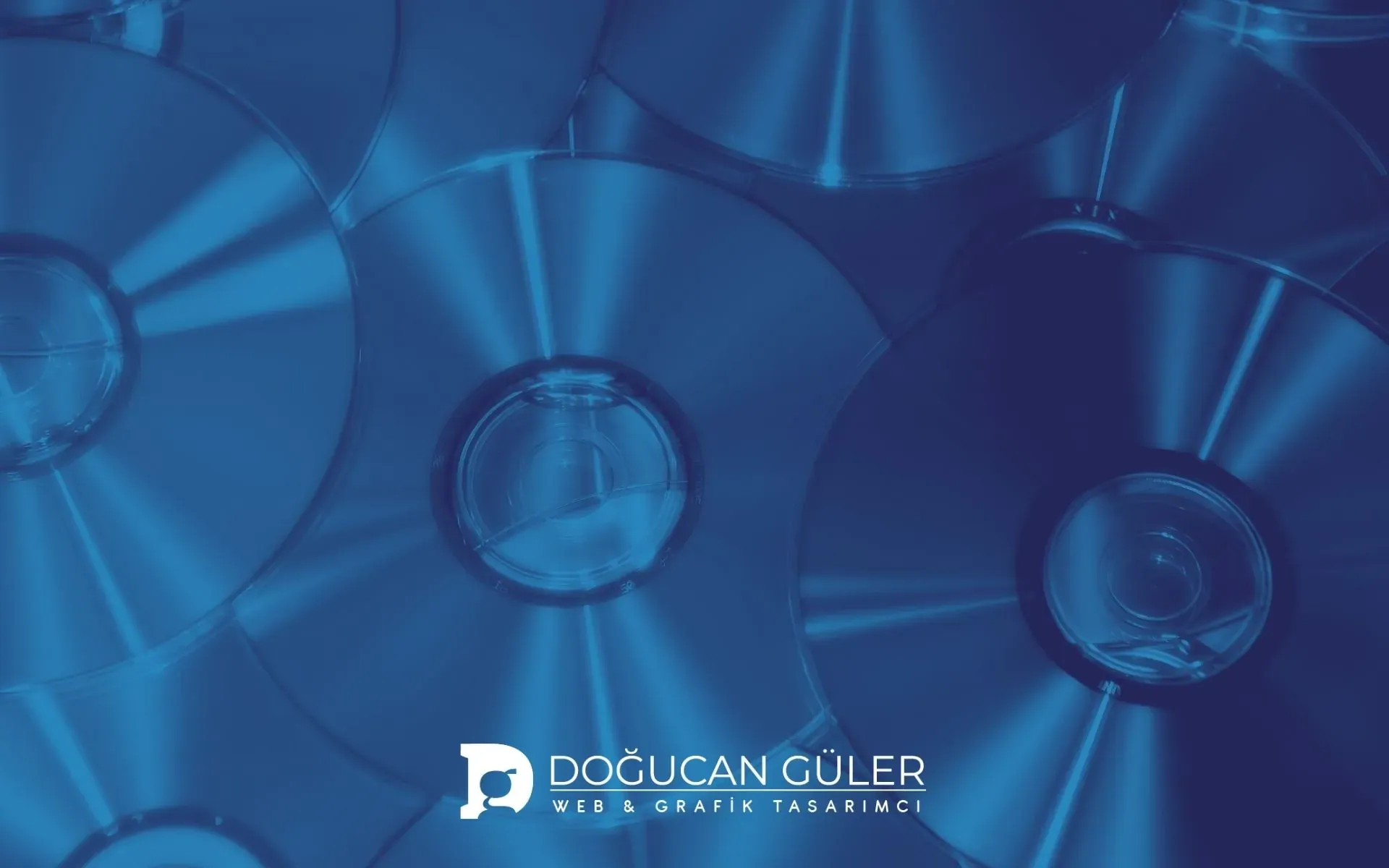
The Compact Disc (CD) is a digital optical data storage medium developed in partnership between Philips and Sony. It was invented in 1982 by Norio Ogha, an employee at Sony, and has been sold commercially from that year. CD technology revolutionised the storage and transfer of digital data and came to be widely used in both the music and computing industries.
What Is a Compact Disc (CD)?
The Compact Disc (CD) is a digital optical data storage medium developed in partnership between Philips and Sony. It was invented in 1982 by Norio Ogha, an employee at Sony, and has been sold commercially from that year. CD technology revolutionised the storage and transfer of digital data and came to be widely used in both the music and computing industries.
Physical Details
A CD is 1.2 mm thick and weighs 15-20 grams. It is mostly made of polycarbonate plastic. The structure of a CD consists of the following sections, from the centre outwards:- Centre Hole: 15 mm in diameter, it allows the CD to be mounted in the player.
- First Transition Zone: Provides the transition to the data area.
- Clamping Area: The area where the data is stored uncompressed.
- Second Transition Zone: The area containing the mirror group, required for reading the data.
- Program Area: The main area where data is stored. It has a radius between 25 mm and 58 mm.
- Frame: Forms the outer edge of the CD.
Standard and Mini CDs
- Standard CDs: 120 mm in diameter with a data capacity of 700 MB. CDs of this size can store up to 80 minutes of uncompressed audio data.
- Mini CDs: With diameters varying between 60 and 80 mm, mini CDs can store about 24 minutes of audio data.
Main CD Types
- CD-ROM: Read-only CDs that cannot be written to. They are generally used for computer programs and data storage.
- CD-RW (Rewritable): A type of CD that can be written to multiple times.
- Blu-ray: An optical disc type with a higher capacity than CD. It is generally used for high-resolution video and storing large amounts of data.
- DVD: An optical disc type similar to a CD but capable of storing more data. DVDs are usually preferred for storing video and high-capacity data.
Commercial Spread and Use
CDs were widely used for many years, especially in the music and software industries. By 2004, the number of CDs sold worldwide reached approximately 30 billion, and by 2007 this number rose to 200 billion. However, in recent years, the rising popularity of digital media and internet-based data storage methods has reduced the use of CDs, although they still maintain their place as a widely used storage technology in the computing industry.Images from the post
Why this topic matters in 2026
Turkey's digital marketing field has gone through three core shifts between 2024 and 2026: (1) mobile-first user behaviour reached 78% of the market, (2) AI-powered content generation and analysis tools went mainstream, (3) with KVKK, e-Commerce 2.0 and Turkish Lira improvements, the cost-to-impact balance of a digital presence has fundamentally shifted for small and mid-sized businesses. The principles described in this post still apply at the execution level under 2026 conditions — only the tools and service providers in use have been updated.
Quick checklist for 2026
- Mobile-first: Test design and content architecture first at 390-430px screen widths; desktop is secondary.
- Performance budget: LCP < 2.0s, CLS < 0.05, INP < 150ms — Core Web Vitals thresholds tightened in 2026.
- AI integration: Embed Claude/GPT-4-class assistants for content generation, visual optimisation and customer support; not one-off prompts but a continuous flow.
- Legal compliance: KVKK disclosure text, cookie consent (TCF v2.2), and double opt-in (DOI) email sign-ups are required.
- Measurement: The GA4 + Meta Conversion API + server-side tracking trio is now standard; GA4 alone is no longer sufficient.
- Branding: Rather than a single logo, a dynamic brand system (colour, typography, motion) stands out on social channels.
Next step
To apply the topic in this post to your own project, you can request a free site analysis, send a brief directly via the request a quote page, or ask for a one-to-one meeting. I respond to all enquiries within 2 business days, in a KVKK-compliant manner.
This post was first published on 22 Apr 2012, and revised on 03 May 2026 to reflect 2026 conditions.