The Fascinating History of the Apple Logo - 2026 Update — post content
Beyond the Bite: A 1500-Word In-Depth History and Meaning of the Apple Logo
Stop for a moment and think of the most recognized symbols in the world. Among the few images that come to your mind, almost certainly will be that elegant apple silhouette with a small bite mark on it. The Apple logo has, for decades, become synonymous with technology, innovation, and sophisticated design. This simple shape, which adorns the back of billions of devices, is much more than a company emblem; it is a cultural icon, a status symbol, and the ultimate expression of a design philosophy. So, how did this journey to flawless simplicity begin? What was the true story behind that famous bite? And how did the logo take shape along with the company's destiny?
In this in-depth journey, we will go down to the origins of the Apple logo, examine every stage of its evolution, debunk the myths surrounding it, and tell the story of how a marvel of graphic design turned into a global phenomenon. If you're ready, let's go back to that first day when everything began with a famous scientist and an apple tree.
Part 1: The Most Modest of Beginnings - The Sir Isaac Newton Logo (1976)
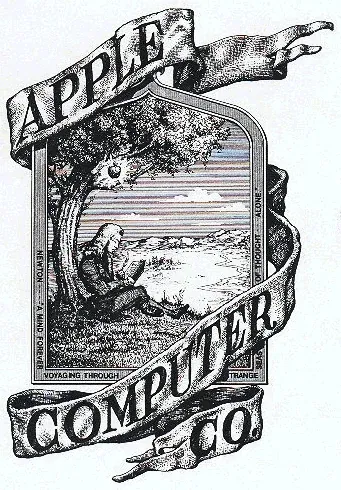
In 1976, when the personal computer revolution was still in its infancy, three young men - Steve Jobs, Steve Wozniak, and Ronald Wayne - founded the Apple Computer Company. The company needed a logo, and Ronald Wayne, the lesser-known third co-founder of Apple, took on this task. In addition to preparing technical documents and the partnership agreement, Wayne also designed the company's first emblem.
This logo, completely opposite to today's minimalist aesthetic, almost resembled a 19th-century engraving. At the center of the design, the legendary scientist Sir Isaac Newton, who, according to the famous story, discovered the law of gravity thanks to an apple falling on his head, was depicted reading a book under an apple tree. This complex drawing was framed by a ribbon-like banner that read "APPLE COMPUTER CO." On the edge of the frame was the deeply meaningful quote from English poet William Wordsworth: "Newton… A Mind Forever Voyaging Through Strange Seas of Thought."

This logo had a philosophical and intellectual depth. Newton's "apple" symbolized a moment of enlightenment and discovery; it also reflected Apple's desire to create a similar revolution in the world of technology. However, it had serious flaws in terms of branding. The logo was incredibly detailed and turned into a smudge when printed in small sizes. It looked more like the emblem of a book club or a university than reflecting the spirit of a modern, fast, and innovative tech company.
Steve Jobs's inherent forward-looking and minimalist design understanding could never reconcile with this logo. To him, the logo was too "intellectual" and "old-fashioned." In just a year, Jobs decided that this depiction couldn't be the company's future and went in search of a more modern, bolder, and most importantly simpler identity.
Part 2: The Birth of an Icon - Rob Janoff and That Famous Bite (1977)
For a new logo, Jobs knocked on the door of Regis McKenna, one of the leading advertising agencies of that period, and the talented graphic designer Rob Janoff was put in charge of the project. Jobs's brief to Janoff was quite simple: "Don't make it cute."
Janoff started the work from the most basic. He went to a supermarket and bought a bag of apples. He put them in a bowl and for days just drew, examined, cut them, and tried to understand their forms. His goal was to capture the simplest and most recognizable silhouette of the apple. Finally, he reached that famous shape with a bite mark on its right side.
So why was that iconic bite there? Many speculations have been made about this over the years, but Janoff himself has explained two main and quite practical reasons behind this decision:
- Scale and Distinctiveness: Janoff's biggest concern was that a simple apple silhouette could be confused with another round fruit, especially a cherry, when printed in small sizes. The bite gave the shape an instant scale. When you saw it, you instantly understood that it was a bitten apple. This was a brilliant design trick that allowed the logo to maintain its identity at every size.
- Technological Wordplay: The second reason was a clever reference to the fact that Apple was a tech company. The word "bite" was a homophone with "byte," the basic unit of data in computer science. This was an inside and clever wordplay that fit the brand's nature. It had imprinted the company's identity in the most basic element of its logo.
Part 3: The Rainbow Revolution - Herald of a Colorful Future (1977-1998)
The bitten apple Janoff designed was not presented in monochrome. Steve Jobs wanted to add color to the logo to make it even more unforgettable. The result was the famous "Rainbow Apple" that would be the company's symbol for 22 years. It consisted of six bright horizontal stripes from top to bottom: green, yellow, orange, red, purple, and blue.
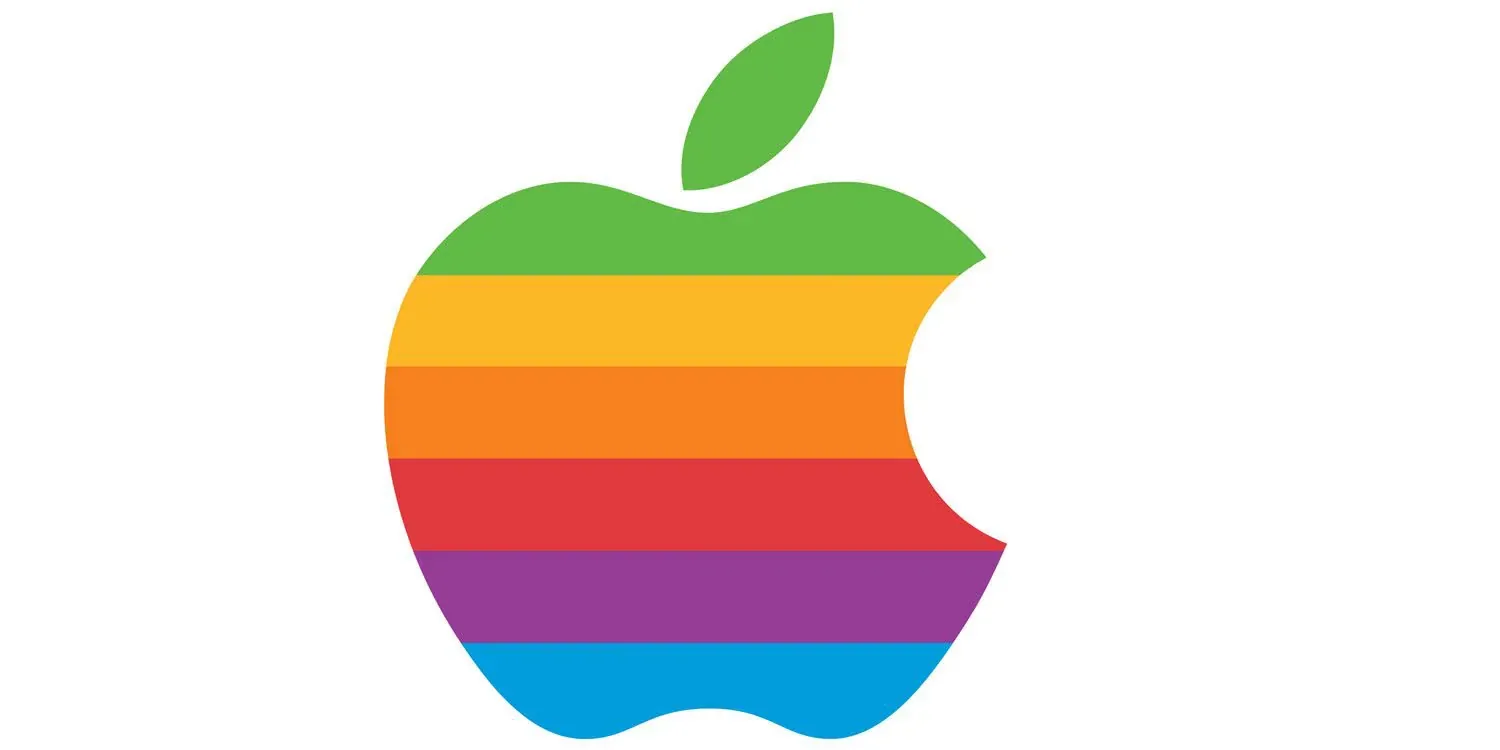
This color choice was much more than an aesthetic preference; it carried a strategic message. The Apple II launched at that time was the first personal computer to support color graphics as standard. While its competitors offered monochrome (usually green or white) text-based screens, Apple promised a colorful world. The rainbow logo was the most vivid declaration of this revolutionary technological superiority. It also aimed to break the cold, corporate, and inaccessible computer image of the time. The colors made the brand more "human," "fun," and "accessible." For Apple, which targeted schools and the younger generation, this was the perfect identity. The Rainbow Apple represented Apple's rebellious spirit of "thinking differently" and challenging the status quo.
Part 4: Myths and Legends - Popular Theories Behind the Logo
It was inevitable that urban legends would form around such an iconic symbol over time. The three most discussed myths about the Apple logo are:
- The Alan Turing Tribute Myth: The most popular and most romantic theory is that the logo is a tribute to Alan Turing, considered the father of modern computer science. Turing committed suicide in 1954 by biting an apple injected with cyanide after being prosecuted for being homosexual. According to the theory, the bitten rainbow apple was a reference both to Turing's tragic end and the rainbow flag, the symbol of the gay rights movement. As meaningful as this sounds, it has been repeatedly denied by both Rob Janoff and Apple officials. Janoff stated that he wasn't even aware of this story while doing the design.
- The Garden of Eden Myth: Another theory suggests that the apple is a reference to the Genesis story in the Bible. Just as Adam and Eve attained "knowledge" by biting the forbidden apple in the Garden of Eden, it is implied that Apple opens the doors of the world of knowledge to its users. While this is also a symbolically powerful connection, it again was not the designer's main intention.
- The Beatles / Apple Corps Myth: It was known that Steve Jobs was a big fan of The Beatles. The name of the band's record company was "Apple Corps" and its logo was also an apple. Although it is thought that the logo and company name were inspired from here, this was more of a coincidental similarity, and led to long legal battles between the two companies in later years.
Part 5: The Triumph of Minimalism - Jobs's Return and the New Era (1998-Present)
In 1997, Steve Jobs returned to Apple, the company he founded but was fired from years earlier. The company was on the brink of bankruptcy and needed an urgent vision renewal. The "Think Different" campaign launched under Jobs's leadership and the launch of the iMac G3, which attracted attention with its colorful cases, were the harbingers of the company's rebirth.
But there was a problem: the 22-year-old rainbow logo now looked complex and outdated on these new, shiny, and translucent products. The rainbow apple on a "Bondi Blue" colored iMac was causing visual chaos. The brand needed to adopt a more sophisticated, more mature, and more professional identity.
Jobs, with a radical decision, retired the rainbow. The iconic apple silhouette and the bite were preserved, but the logo was now monochrome. This offered an incredibly flexible solution. The logo could adapt to each product's color and material. It was first introduced on iMacs with translucent "Aqua" blue. Later, the "Chrome" version, which gained a metallic and shiny look, became popular especially with the launch of the iPhone and MacBook. In recent years, Apple has pioneered the "flat design" trend and brought its logo to its current flat, matte, and minimalist form.

Today, this monochrome logo can appear as space gray on the back of an iPhone, silver on a MacBook, or bright white on the facade of a retail store. This simplicity gives the message of the brand's self-confidence and that the quality of its products surpasses the logo.
Conclusion: Much More Than a Logo
The Apple logo's journey from Newton's complex drawing to today's minimalist silhouette is actually a perfect summary of the company's own evolution. From the intellectual but complex spirit at the beginning, to the colorful and rebellious revolt of the 80s; from the sophisticated chic of the rebirth in the early 2000s, to today's self-confident and absolute simplicity... The logo has always reflected Apple's mood and vision at the time.
This apple, which both gained scale with a bite and saluted technology, heralded a revolution with colors, and finally found ultimate elegance in simplicity, is no longer just a company emblem. It is a timeless cultural symbol representing the dreams of a generation, a design revolution, and the power of "thinking differently."